Last updated: November 2026
The .177 vs .22 pellet debate is the most common question new airgunners ask—and for good reason. These two calibers dominate the air rifle market, and choosing between them significantly impacts your shooting experience. Whether you’re wondering what caliber pellet gun to buy or comparing .177 vs .22 air rifle options for a specific purpose, this guide will help you make the right choice.
Here’s the short answer: .177 is better for target shooting and beginners, while .22 is better for hunting and pest control. But the full story involves physics, cost, accuracy, and your specific shooting goals. Let’s break it down.
Understanding the Physics: Why Caliber Matters
Before diving into use cases, it helps to understand the fundamental physics differences between .177 vs .22 pellet ammunition. These differences drive all the practical considerations.
Pellet Diameter and Weight
The numbers refer to the pellet diameter in inches:
-
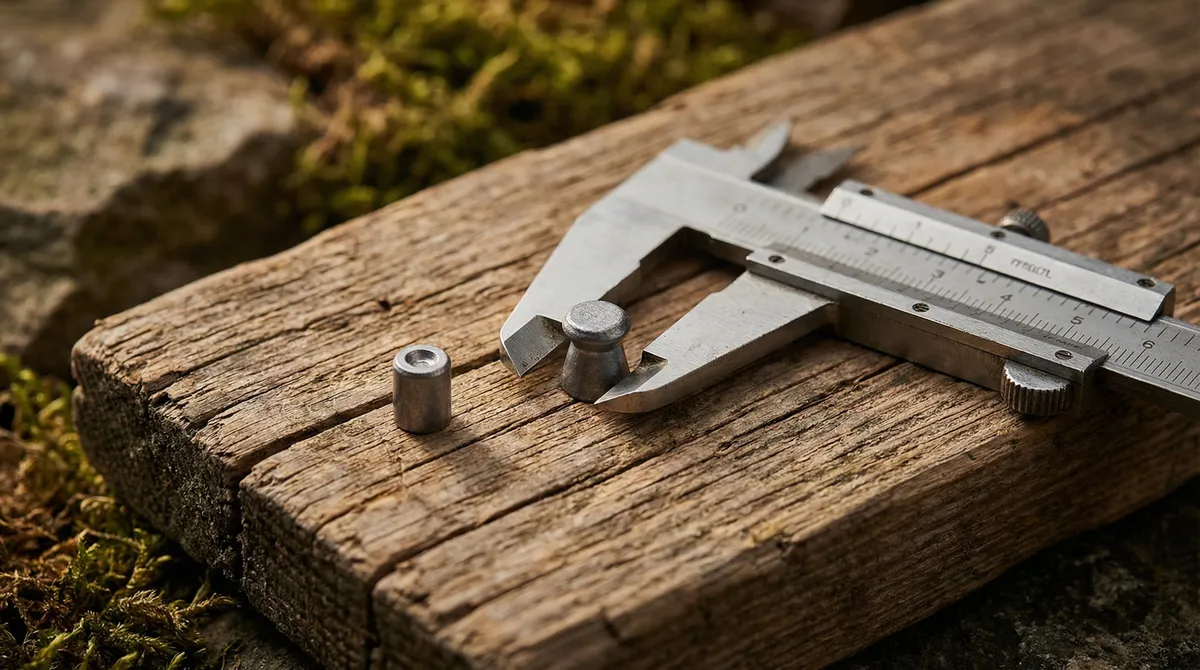
.177 caliber = 4.5mm diameter, typically 7-10 grains weight
-
.22 caliber = 5.5mm diameter, typically 14-18 grains weight
This seemingly small difference in diameter results in a pellet that weighs roughly twice as much in .22 caliber. That extra mass changes everything about how the pellet performs.
Velocity vs. Energy: The Critical Distinction
Many manufacturers advertise air rifles by their velocity (FPS), but velocity alone doesn’t tell the whole story. What matters for hunting and pest control is energy, measured in foot-pounds (FPE).
Here’s the physics that matters:
-
.177 pellets travel faster but carry less energy due to lighter weight
-
.22 pellets travel slower but deliver more energy on target due to greater mass
A typical .177 air rifle shooting a 7.9-grain pellet at 1,000 FPS produces about 17.5 FPE. The same rifle in .22 caliber shooting a 14.3-grain pellet at 800 FPS produces about 20.3 FPE—16% more energy despite the slower velocity.
The Energy Formula
Energy (FPE) = (Pellet Weight in grains × Velocity² ) ÷ 450,240
Because velocity is squared in this formula, lighter .177 pellets need significantly higher velocities to match .22 energy levels. This rarely happens in practice.
Trajectory Differences
The lighter, faster .177 pellet shoots flatter—meaning it drops less over distance. This makes range estimation easier and reduces holdover adjustments. At 30 yards, a .177 pellet typically drops less than a .22 from the same rifle platform.
For target shooters working at fixed, known distances, this advantage is minimal. For hunters taking shots at varying ranges, it can mean the difference between a hit and a miss.
Wind Drift
Here’s where physics gets counterintuitive: despite their higher velocity, .177 pellets are more affected by wind than .22 pellets. The heavier .22 pellet maintains momentum better, resulting in less drift in crosswind conditions.
For hunting in variable conditions, this matters.
.177 vs .22 Air Rifle: Complete Comparison Table
| Factor | .177 Caliber | .22 Caliber | Winner |
|---|---|---|---|
| Pellet Weight (typical) | 7-10 grains | 14-18 grains | Depends on use |
| Velocity (typical) | 900-1,200 FPS | 700-1,000 FPS | .177 |
| Energy (typical PCP) | 15-25 FPE | 25-35 FPE | .22 |
| Trajectory (flatness) | Flatter | More arc | .177 |
| Wind Resistance | More drift | Less drift | .22 |
| Pellet Cost (per 500) | $8-15 | $12-25 | .177 |
| Pellet Selection | Excellent | Excellent | Tie |
| Shots Per Fill (PCP) | 60-80+ | 40-60 | .177 |
| Hunting Effectiveness | Limited | Good | .22 |
| Target Shooting | Excellent | Good | .177 |
| Noise Level | Quieter | Slightly louder | .177 |
What Caliber Pellet Gun for Different Uses?
The best caliber depends entirely on what you plan to do. Here’s our use-case matrix to help you decide what caliber pellet gun fits your needs:
Target Shooting and Plinking
Winner: .177 caliber
For punching paper and ringing steel, .177 is the standard choice. Here’s why:
-
Lower cost per shot: You’ll shoot more for less money, which means more practice
-
Flatter trajectory: Easier to hit small targets at varying distances
-
Olympic standard: All international air rifle competition uses .177
-
More shots per fill: PCP shooters get significantly more shots before refilling
-
Easier on backstops: Less energy means your pellet trap or backstop lasts longer
If your primary goal is developing marksmanship skills, enjoying backyard plinking, or competing in organized shooting sports, .177 is the clear choice.
Best .177 Target Rifle: Diana RWS 34 on Amazon
Hunting Small Game
Winner: .22 caliber
For squirrels, rabbits, and similar-sized game, .22 caliber delivers the energy needed for clean, ethical kills:
-
More energy on target: Ensures adequate penetration and tissue damage
-
Better energy retention: Maintains killing power at longer distances
-
Less affected by wind: More predictable shot placement in field conditions
-
Larger wound channel: More effective terminal performance
Most experienced airgun hunters consider .22 the minimum caliber for small game. While .177 can technically kill small animals, the margin for error is smaller—a slightly off shot that would be lethal with .22 might only wound with .177.
Best .22 Hunting PCP: Air Venturi Avenger on Amazon
Pest Control
Winner: .22 caliber (with caveats)
For dispatching pests like rats, starlings, pigeons, and similar nuisance animals, the ideal caliber depends on the specific situation:
| Pest Type | Recommended Caliber | Reason |
|---|---|---|
| Rats (close range, under 25 yards) | .177 or .22 | Either works; .177 is quieter for urban areas |
| Rats (longer range, 25-40 yards) | .22 | Better energy retention ensures clean kills |
| Starlings and sparrows | .177 | Smaller targets; .177 accuracy advantage helps |
| Pigeons | .22 | Larger, tougher birds need more energy |
| Squirrels | .22 | Tough animals requiring adequate penetration |
| Groundhogs/Woodchucks | .22 or larger | Large, tough animals; consider .25 caliber |
For general-purpose pest control where you might encounter various pests at various ranges, .22 caliber offers the best versatility.
Best .22 Pest Control: Gamo Swarm Magnum on Amazon
All-Around Use
Winner: .22 caliber
If you can only have one air rifle for everything—plinking, occasional hunting, pest control, and backyard target practice—.22 caliber offers the best versatility. You sacrifice a bit of efficiency for target shooting but gain capability for hunting applications.
Pellet Cost and Availability Comparison
Long-term shooting costs differ significantly between calibers. Here’s what you’ll typically pay for quality pellets:
.177 Caliber Pellet Costs
-
Budget pellets (Crosman, Daisy): $5-8 per 500
-
Mid-range pellets (RWS, Gamo): $8-12 per 500
-
Premium pellets (JSB, H&N): $12-18 per 500
Cost per shot: $0.01 – $0.04
.22 Caliber Pellet Costs
-
Budget pellets (Crosman, Daisy): $8-12 per 500
-
Mid-range pellets (RWS, Gamo): $12-18 per 500
-
Premium pellets (JSB, H&N): $18-28 per 500
Cost per shot: $0.02 – $0.06
Availability
Both .177 and .22 caliber pellets are widely available at sporting goods stores, Walmart, online retailers, and specialty airgun shops. Neither caliber has a significant availability advantage—both are considered “mainstream” calibers with excellent selection.
The real availability advantage of .177 and .22 over larger calibers (.25, .30) becomes apparent when you need pellets in a hurry. Almost any store selling airguns will stock both common calibers.
Recommended Air Rifles by Caliber
Best .177 Air Rifles
Diana RWS 34 .177 – Best for Target Shooting
The German-made Diana 34 offers exceptional accuracy in a well-crafted spring-piston platform. The T06 trigger and hammer-forged barrel reward good technique with tight groups. Perfect for backyard target shooting and developing fundamentals.
Gamo Swarm Magnum 10X .177 – Best Multi-Shot .177
Gamo’s innovative 10-shot magazine combined with magnum power makes this the most practical break barrel on the market. The Gen 3i improvements deliver smoother operation and consistent accuracy. Ideal for high-volume plinking.
Best .22 Air Rifles
Air Venturi Avenger .22 – Best Budget Hunting PCP
The Avenger delivers exceptional value with its fully adjustable regulator, hammer spring, and transfer port. In .22 caliber, it produces 30+ FPE—plenty for small game and pest control. The feature set rivals PCPs costing twice as much.
Gamo Swarm Magnum 10X .22 – Best Break Barrel for Hunting
With approximately 33 FPE and 10-shot capability, the Swarm Magnum .22 is the most capable break barrel hunting rifle available. The magazine system provides crucial follow-up shot capability that single-shot break barrels lack.
Hatsan Edge .22 – Best Budget Entry
For shooters on a tight budget who need .22 caliber capability, the Hatsan Edge delivers reliable performance at an entry-level price. The Turkish-made spring combo includes a scope and mounts, making it a complete package. It won’t match premium rifles, but it’s a capable starter for pest control and casual hunting.
The Bottom Line: .177 vs .22 Decision Guide
Still not sure? Use this simple decision framework:
Choose .177 Caliber If:
-
Target shooting is your primary activity
-
You want the lowest cost per shot
-
You shoot competitively (or might in the future)
-
You need maximum shots per fill (PCP)
-
You’re primarily shooting at known, fixed distances
-
Noise is a major concern (suburban areas)
Choose .22 Caliber If:
-
Hunting or pest control is a primary use
-
You want one rifle that does everything reasonably well
-
You’ll be shooting in variable wind conditions
-
Clean, ethical kills are your priority
-
You’re targeting larger pests (pigeons, squirrels, rabbits)
-
Maximum energy on target matters more than shot count
Related Guides on PelletGuns101
Want to dive deeper into air rifle selection? Check out these related guides:
Final Verdict
The .177 vs .22 pellet debate doesn’t have a universal winner—the best caliber depends entirely on your intended use. For dedicated target shooters, .177 remains the gold standard. For hunters and pest controllers, .22 delivers the energy needed for clean kills.
If you’re still undecided and can only buy one rifle, we lean toward .22 caliber for its versatility. You can still enjoy target shooting with .22 (at slightly higher cost), but you can’t ethically hunt small game with an underpowered .177.
Whichever caliber you choose, invest in quality pellets and practice regularly. The shooter matters more than the caliber—a skilled marksman with .177 will outperform a novice with .22 every time.
Happy shooting!
Disclosure: PelletGuns101.com is a participant in the Amazon Services LLC Associates Program, an affiliate advertising program designed to provide a means for sites to earn advertising fees by advertising and linking to Amazon.com. When you purchase through our links, we may earn a small commission at no additional cost to you. This helps support our site and allows us to continue providing free airgun content and reviews.