Last updated: July 2026
If you’re a scout, a parent, or a merit badge counselor searching for a Scouts BSA shooting sports merit badge air rifle, you’ve probably discovered that the advice online is either vague or aimed at hunters. This guide is different. After years around youth marksmanship ranges and testing dozens of entry-level trainers, I’ll walk you through exactly what the program uses, what you can realistically buy for home practice, and the safety rules that matter most.
Here’s the honest short version up front: you almost never need to buy a rifle to earn the Rifle Shooting merit badge—councils provide the equipment at their ranges. But owning the right .177 trainer to build fundamentals before the range pays off enormously, and late July heading into back-to-school scouting season is the smartest time to buy. Let’s break it all down.
Understanding the Scouts BSA Rifle Shooting Merit Badge
First, a quick clarification that trips up a lot of families. There is no single badge literally called the “Shooting Sports” merit badge. BSA’s shooting sports program includes three separate merit badges—Rifle Shooting, Shotgun Shooting, and Archery. The one that involves an air rifle for the Boy Scouts marksmanship program is the Rifle Shooting merit badge.
The Rifle Shooting merit badge has two paths for the live-fire qualification requirement, and the scout picks one:
- Option A — Modern cartridge rifle: Qualifying with a .22 caliber rimfire rifle.
- Option B — Air rifle: Qualifying with a .177 caliber air rifle.
The air rifle option is popular for good reason. It’s less expensive to run, quieter, has minimal recoil, and is far more forgiving for a new shooter learning sight picture and trigger control. Under Option B, scouts typically shoot at short indoor distances (roughly 5 to 10 meters, or about 15 to 33 feet) and must produce qualifying groups from supported and unsupported positions.
If your scout is comparing calibers or wondering why the program leans on .177 for air rifles, our .177 vs .22 caliber air rifle guide explains the physics in plain language.
Do You Actually Need to Buy an Air Rifle for the Merit Badge?
Let’s be straight, because this is where a lot of well-meaning articles quietly mislead buyers to sell product.
No—you do not need to own an air rifle to earn the Rifle Shooting merit badge. BSA shooting sports are conducted at council- or district-approved ranges run by certified range officers and NRA-certified instructors. Under BSA’s Guide to Safe Scouting and the National Shooting Sports Manual, rifle shooting cannot be run casually at a troop meeting or in a backyard as an official scouting activity. The range provides the rifles, the pellets, and the supervision. Scouts do not bring personal air rifles to these events.
So why buy one at all? Two legitimate reasons:
- Home fundamentals practice. The single biggest predictor of a smooth qualification day is a scout who already understands the four fundamentals—steady position, aiming, breath control, and trigger squeeze. A low-cost .177 trainer lets a scout ingrain those habits privately (as a family activity, not an official BSA event) so range time is spent qualifying instead of learning from scratch.
- Lifelong recreation. Marksmanship is a hobby, not a one-day checkbox. Many scouts fall in love with target shooting and want to keep going.
Bottom line: buy a rifle to build the shooter, not to earn the badge. Keep any home practice a private family activity that follows every safety rule below.
What “Approved-Style” Air Rifles the Marksmanship Program Uses
BSA does not publish a list of approved commercial models, and any site claiming a specific product is “BSA approved” is stretching the truth. What the program does specify is the style: single-shot, .177 caliber, iron-sighted target rifles shot deliberately one round at a time.
At the range level, you’ll most often see purpose-built target guns like these (worth knowing by name, even though they’re club-grade and pricey):
- Daisy Avanti 853 / 753 / 888 — single-stroke pneumatic .177 target rifles that are the backbone of sporter-class three-position air rifle programs, 4-H, and CMP youth shooting.
- Crosman Challenger PCP — a precharged pneumatic precision-class competition rifle for advanced shooters.
- Daisy 499B Champion — the 5-meter competition BB gun used in Cub-level and Daisy National BB Gun Championship matches.
These are what councils buy in bulk. For a family, though, the goal is a more affordable trainer that mimics the same disciplined, single-shot, iron-sight experience—which is exactly what the picks below deliver.
Safety Requirements Every Scouting Family Must Follow
Safety is not a section to skim. It’s the entire culture of BSA shooting sports, and it should govern every minute your scout spends behind a trigger at home. Here are the non-negotiables:
- Eye protection, always. ANSI Z87.1-rated safety glasses are mandatory on any range and should be mandatory at home too. Ricochet is a real risk with BBs especially.
- Treat every gun as if it’s loaded. Muzzle stays pointed downrange at all times—never at people, pets, or anything you don’t intend to shoot.
- Adult supervision, no exceptions. A responsible adult runs every session, gives the commands (“commence firing,” “cease fire”), and enforces them.
- Finger off the trigger until the sights are on target and you’ve decided to fire.
- Know your target and what’s beyond it. Use a proper pellet trap or a dense backstop rated for airguns; never a soft or reflective surface.
- Store safely. Unloaded, locked, and separate from ammunition when not in use.
- No horseplay. BSA range culture is calm and deliberate—model it at home.
These mirror the NRA gun safety rules that BSA instructors teach, and reinforcing them at home means your scout shows up to the range already fluent in range etiquette.
A simple, worthwhile add-on for every young shooter is a pair of wraparound safety glasses like the Radians WildCat Safety Glasses. They’re inexpensive, ANSI Z87.1-rated, and small enough to fit younger faces. If you’re still weighing a BB gun versus a pellet rifle for a first trainer, our breakdown of the key differences between air rifles and BB guns is a helpful primer.
Best Air Rifle for Scout Shooting Sports Merit Badge Prep: Our 2026 Picks
Every rifle below is a real, currently available, affordable .177 trainer that reinforces the single-shot, iron-sight discipline the program rewards. None of these are hunting rifles—they’re deliberately low-powered practice tools ideal for supervised backyard or basement ranges with a proper backstop.
1. Daisy Powerline 880 — Best Overall Merit Badge Trainer
The Daisy Powerline 880 is my top recommendation for scouts prepping for the air rifle option. It’s a multi-pump pneumatic that shoots .177 pellets single-shot via a bolt action (and BBs from a reservoir if you want variety). Loading one pellet at a time and choosing a pump count forces the deliberate, one-shot-at-a-time rhythm of target shooting—exactly the mindset needed on qualification day. It wears both a fiber-optic front sight and an adjustable rear, plus an included 4x scope on many kits, so a scout can learn iron sights first and graduate to optics later. Velocity climbs with pump count (up to roughly 715 fps), but for 5–10 meter target work, a consistent 3–4 pumps is all you need.
2. Crosman 2100 Classic — Best Full-Size Feel
The Crosman 2100 Classic is the 880’s closest rival and a fantastic trainer in its own right. It’s another multi-pump pneumatic with a bolt-action single-pellet feed in .177 (plus a 200-BB reservoir), reaching up to about 755 fps. What sets it apart is a longer, more full-size rifle stock that gives taller or older scouts a proper cheek weld and length of pull—closer to the feel of a club target rifle. If your scout is on the bigger side of the 11–17 age range, this one grows with them.
3. Daisy 499B Champion — Best for Pure Precision
If your family is coming up through the Cub Scout BB-gun program or you simply want the most accurate trainer at 5 meters, the Daisy 499B Champion is legendary—widely called the most accurate BB gun in the world. It’s a single-shot, muzzle-loaded BB gun with a deliberately gentle ~240 fps velocity and match-grade sights, built specifically for 5-meter (16.4 ft) competition. It teaches precision better than anything else at its price, though it’s BB-only and short-range by design.
4. Daisy Red Ryder — Best First Step for Younger Scouts
The Daisy Red Ryder is the classic entry point—a lever-action BB gun (~350 fps, 650-BB capacity) that’s light, simple, and endlessly fun. It’s not a precision instrument, but it’s a superb way to introduce muzzle discipline and the four fundamentals to a younger scout before stepping up to a pellet trainer. For the full story on this icon, see our dedicated Daisy Red Ryder review.
Air Rifle Comparison Table for Scouts
| Model | Power Source | Ammo | Action | Top Velocity | Best For |
|---|---|---|---|---|---|
| Daisy Powerline 880 | Multi-pump pneumatic | .177 pellet / BB | Bolt (single pellet) | ~715 fps | Best all-around merit badge prep |
| Crosman 2100 Classic | Multi-pump pneumatic | .177 pellet / BB | Bolt (single pellet) | ~755 fps | Older/taller scouts, full-size feel |
| Daisy 499B Champion | Spring, muzzle-loaded | BB only | Single shot | ~240 fps | Pure 5-meter precision |
| Daisy Red Ryder | Spring lever | BB only | Lever (repeater) | ~350 fps | Younger first-time shooters |
For deeper coverage of trainers in this class, our best youth air rifles for kids guide reviews additional options and sizing considerations.
Back-to-School Scouting Season: Why Late Summer Is the Time to Buy
Timing matters more than most families realize. Late July and August are the runway into back-to-school scouting season, when packs and troops hold Join Scouting nights, recruit new members, and lock in their fall and winter program calendars. That calendar almost always includes fall camporees and council-run merit badge days—many of which offer the Rifle Shooting merit badge in September through November, followed by indoor air rifle ranges through winter.
That means a scout who picks up a trainer now, in mid-summer, has roughly six to eight weeks of unhurried practice before fall range opportunities arrive. Buy in October and you’re cramming; buy in July and your scout walks up to the line already comfortable. It’s the difference between a stressful qualification and a confident one. Summer daylight and warm evenings also make setting up a safe backyard range easy.
Setting Up Home Practice Before the Range
You don’t need much to build real skill at home:
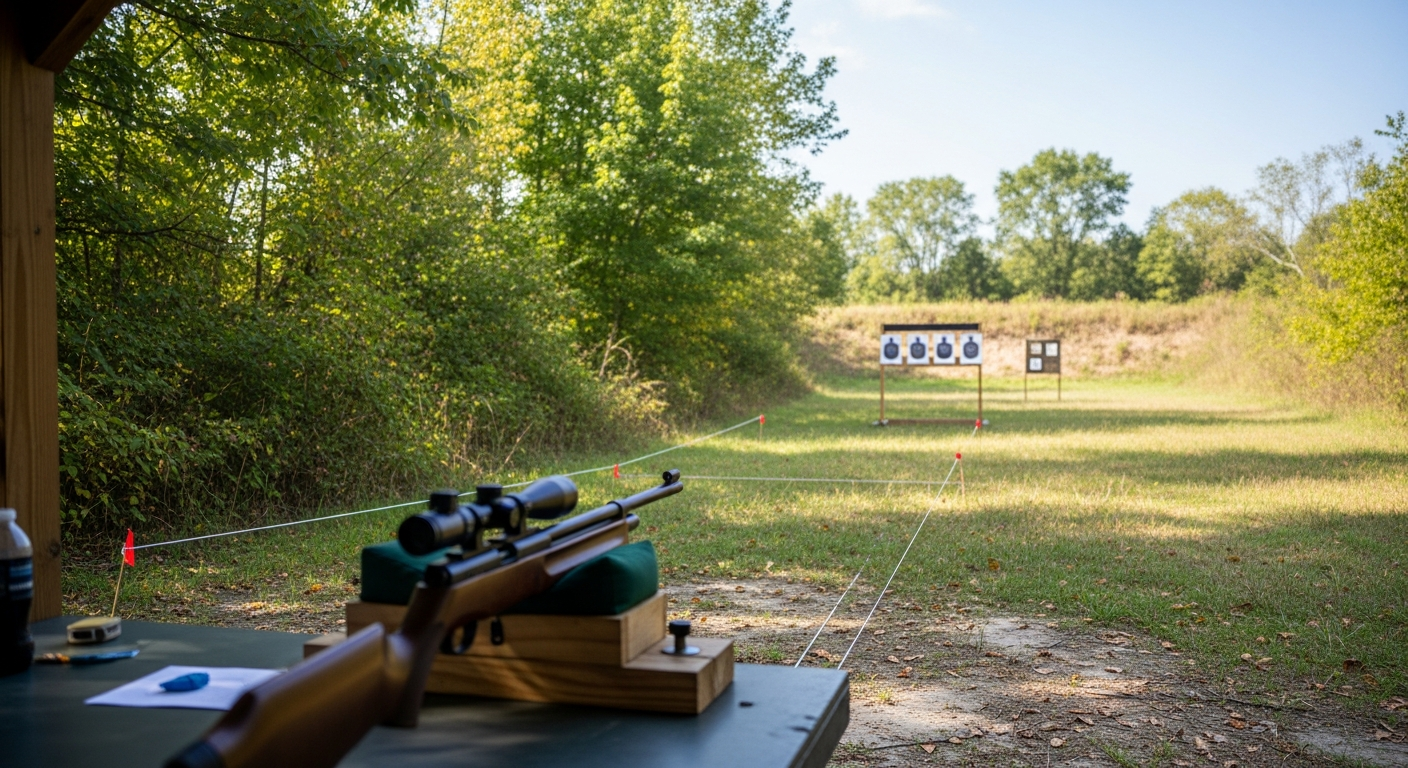
- A proper backstop or pellet trap rated for airguns, with a safe area behind it.
- Official-style targets at a measured 5 meters (16.4 feet) to match qualification distance.
- A rest and a mat for supported and prone positions.
- A logbook—having your scout record each group builds the same accountability the program teaches.
Start with iron sights before touching a scope, and drill the fundamentals in short, focused sessions. Our roundup of 10 air rifle marksmanship drills is built exactly for this, and when your scout is ready to add optics, our step-by-step guide to sighting in an air rifle walks through the whole process.
Always confirm current program requirements and range rules with your local BSA council through the official Scouting.org site and your unit’s shooting sports coordinator—details are updated periodically, and your merit badge counselor is the final authority.
Watch and Learn: Air Rifle Marksmanship Videos
A few genuinely helpful videos for scouts and parents getting started:
- How to Shoot a Break Barrel Air Rifle More Accurately — fundamentals of position, hold, and follow-through that transfer directly to target work.
- Best Inexpensive Air Rifle for Adults (Over 20 Guns Reviewed!) — a broad look at affordable options if you’re comparing beyond our picks.
- Top 4 Best Air Rifles Under $300 In 2026! — budget-focused buying guidance for families.
Frequently Asked Questions
Does the Scouts BSA Rifle Shooting merit badge require an air rifle?
No. Scouts can qualify using either a .22 rimfire rifle (Option A) or a .177 air rifle (Option B). The air rifle path is popular because it’s quieter, lower-recoil, and easier for new shooters. Either way, the council range provides the equipment.
What caliber air rifle does the BSA marksmanship program use?
The air rifle option uses .177 caliber, shot single-shot at short indoor distances. That’s why every trainer in this guide is .177 (some also fire BBs). It matches the program and keeps pellet costs low.
Can my scout bring their own air rifle to the range to earn the badge?
Generally no. BSA shooting sports are run at council- or district-approved ranges with provided equipment and certified instructors. Personal air rifles are for private home practice, not official scouting events. Always confirm with your council.
Is a BB gun good enough to prepare for the merit badge?
A BB gun like the Daisy 499B or Red Ryder is excellent for teaching safety and the four fundamentals, but the qualification uses a .177 pellet air rifle. For the most transferable practice, a .177 pellet trainer like the Daisy 880 or Crosman 2100 is ideal—ideally start with a BB gun for younger scouts and step up.
What’s the minimum age for the Rifle Shooting merit badge?
The Rifle Shooting merit badge is for Scouts BSA members (generally ages 11–17). Cub Scouts (younger) participate in a separate BB-gun program at council day camps and events rather than earning merit badges.
Do these trainers have enough power for hunting?
No—and that’s intentional. These are low-powered marksmanship trainers, not hunting rifles. If hunting is your goal later on, that’s a completely different tool; start with our best youth air rifles guide and move up from there.
Final Thoughts
The smartest way to approach the best air rifle for scout shooting sports merit badge prep is to separate two things: earning the badge (done at a supervised council range with provided gear) and building a confident shooter (done with focused, safe home practice). A modest .177 trainer—the Daisy Powerline 880 for most families, the Crosman 2100 for bigger kids, the 499B for precision, or the Red Ryder for the youngest—turns qualification day from a nerve-wracking test into a victory lap.
Buy now, in the heart of back-to-school scouting season, drill the fundamentals through late summer, keep every session locked to the safety rules above, and your scout will be ready when the fall range days arrive. Then explore the marksmanship drills to keep the improvement going.
This article contains affiliate links. If you make a purchase through these links, we may earn a commission at no extra cost to you. This helps support the site and allows us to continue providing helpful content.